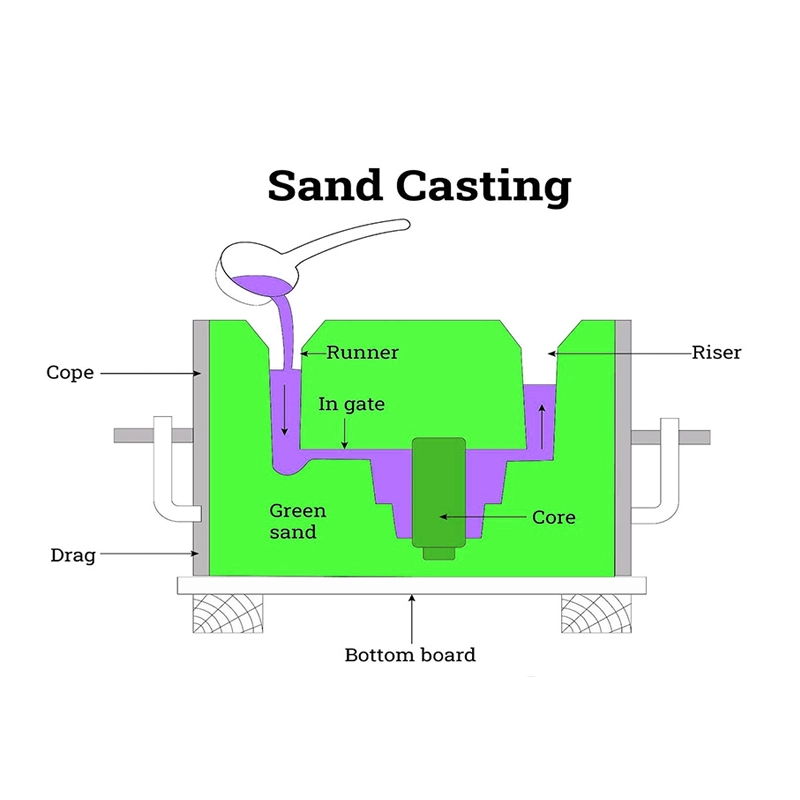
Sand casting is one of the oldest and most flexible metal-shaping technologies still in heavy use today. For manufacturers, foundries, and product engineers who need robust, low-cost metal components—especially for medium to large parts or low-to-medium production volumes—sand casting remains a go-to process. At Plantmetal, our factory offers sand casting as part of a broader one-stop service that can include machining, finishing, and assembly alongside custom metal stamping parts when hybrid solutions are required.
What Is Sand Casting?
Sand casting is a mold-based metal casting technique in which a pattern (a replica of the final part) is pressed into a sand mixture to form a cavity. Molten metal is poured into that cavity, allowed to solidify, then the sand mold is broken away to reveal the casting. Because the mold is expendable, sand casting is cost-effective for prototypes, single units, and medium production runs.
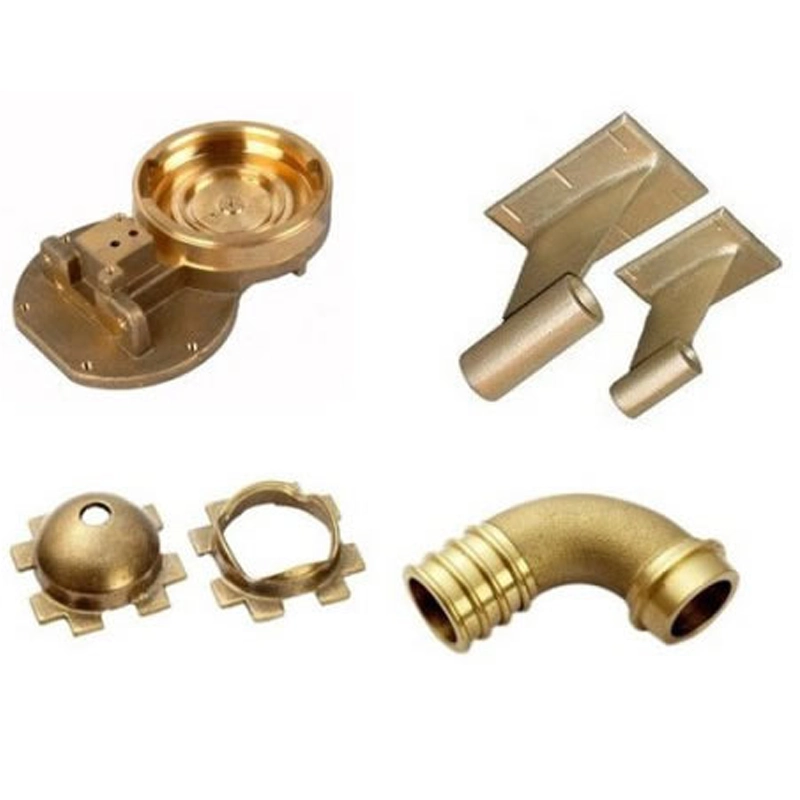
The Properties of Sand Casting
Sand-cast parts generally offer:
- Good dimensional flexibility (large sizes possible)
- Acceptable surface finish (improvable by secondary processes)
- Tolerant to complex shapes and cores for internal features
- Reasonable mechanical properties depending on alloy and heat treatment
Components of a Sand Casting Mold
Key mold elements include:
- Pattern — positive shape used to form the cavity
- Core — internal sand shape that creates hollow features
- Flask — frame holding sand (cope and drag)
- Gating system — sprue, runners, and gates that direct metal flow
- Vents and risers — help remove gas and feed shrinkage
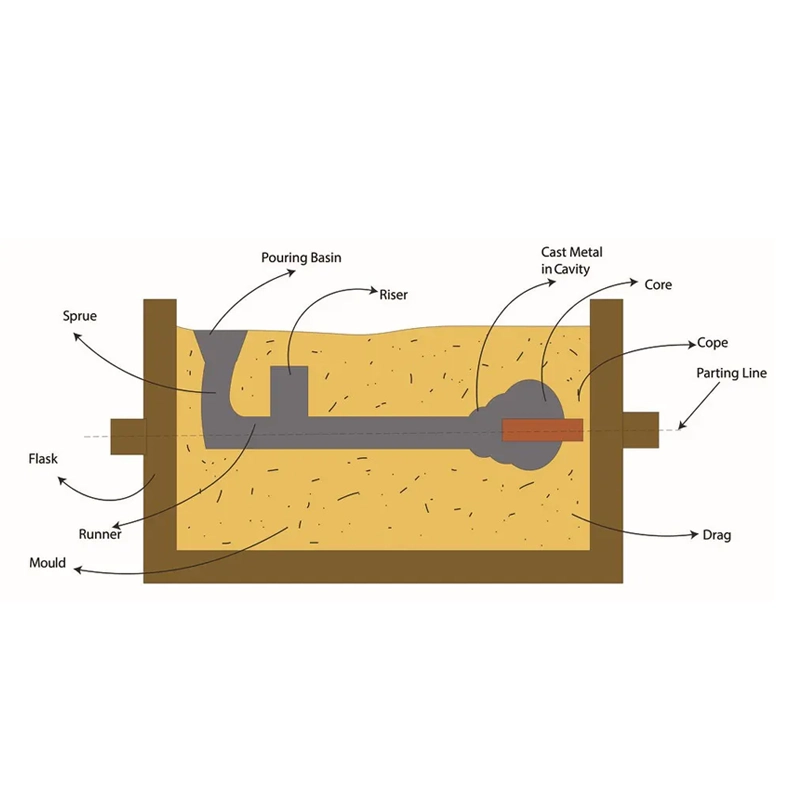
How to Make a Sand Casting Mold
- Pattern Preparation — patterns (wood, metal, or 3D printed) are cleaned and coated with a release agent.
- Schimmel Mixing and Tempering — sand is mixed with binder (clay, resin, or chemical) and moisture-controlled.
- Placing the Pattern in the Sandbox — pattern set in flask; sand packed around it (ramming).
- Mold Filling and Compacting — sand is compacted carefully to hold detail.
- Assembling the Coupling — join cope and drag together.
- Removing the Pattern — pattern withdrawn to leave the cavity.
- Placing Cores (if necessary) — install cores for internal passages.
- Assembling the Mold Halves — align precisely.
- Adding the Gating System — attach sprue and runners for metal flow.
The Process of Sand Casting
- Pattern making — manufacture the pattern according to drawing and shrinkage allowances.
- Mold preparation — create the sand mold around the pattern.
- Core making — produce any internal cores needed.
- Mold assembly — assemble mold halves and cores; install gating.
- Metal melting and pouring — melt alloy to correct temperature and pour into the mold.
- Cooling and solidification — allow adequate time for complete solidification.
- Sanding (demolding) — break the sand and remove the casting.
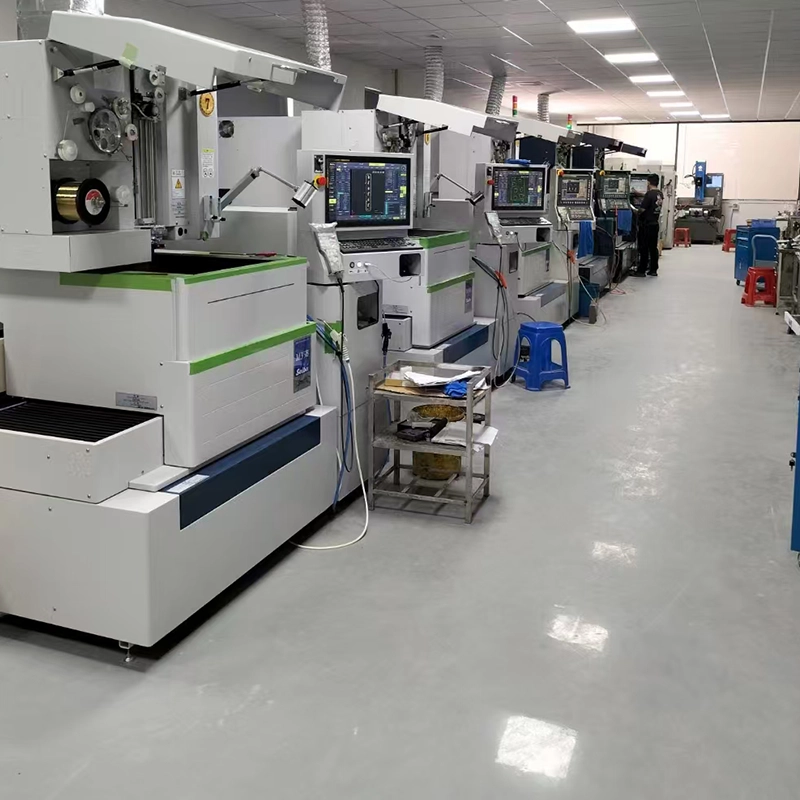
- Cleaning and finishing — remove gates, risers; shot-blast, grind, or machine critical faces.
- Inspection and finishing — NDT, dimensional checks, heat treat, and machining as required.
Types of Sand Casting Processes
- Green sand casting — damp sand with clay binder; economical and widely used.
- Dry sand casting — mold baked/dried for better surface and dimensional accuracy.
- Resin sand (no-bake) — chemical binder cures at room temperature for higher precision.
- Shell molding — resin-coated sand forms a thin shell mold for improved accuracy.
- Vacuum (V-process) — uses vacuum to form the mold; excellent for fine detail.
- CO₂ (sodium silicate) and cold-/hot-box processes — specialized binder systems for productivity and core strength.
Types of Sand Used in Sand Casting
Common sands include silica (quartz), chromite, zircon, olivine, garnet, and synthetic sands—each selected for thermal properties, refractoriness, and finish.
Types of Metals Used in Sand Casting
Sand casting accommodates most castable alloys:
- Cast iron (common for engine blocks)
- Carbon and alloy steels
- Stainless steel
- Aluminum alloys (lightweight, excellent for housings)
- Copper, brass, and bronze
- Magnesium and nickel alloys for specialty applications
Advantages of Sand Casting
- Low tooling cost for prototypes and short runs
- Ability to cast very large parts and complex geometries
- Quick turnaround from pattern to part
- Versatility in alloy selection
Limitations of Sand Casting
- Lower dimensional accuracy than die casting or investment casting
- Rougher surface finish (may require machining)
- Higher porosity risk without proper gating and feeding
- Longer post-processing for tight tolerances
Cost of Sand Casting
Cost drivers include pattern complexity, sand type and binder, alloy choice, required finishing and machining, and batch volume. For many projects—including units supplemented with custom metal stamping parts—sand casting offers an economical path to validation and production.
What Are the Uses of Sand Casting?
Sand-cast components are used in automotive engine blocks, pump housings, valve bodies, heavy machinery frames, art sculptures, and utility hardware. Where strength, size, and cost-efficiency matter, sand casting delivers.
Conclusion
Sand casting remains an indispensable manufacturing method for a wide span of industries. At Plantmetal, our foundry and finishing services integrate sand casting with CNC machining, stempeln, and assembly to deliver production-ready components—supporting OEMs and suppliers with a true one-stop service. If you need help evaluating sand casting for a specific part, or you require a quote for prototype or production volumes, send us your drawing and material requirements. Our engineering team will provide a feasibility assessment, recommend alloys and sand systems, and propose an optimized cost and delivery plan.