
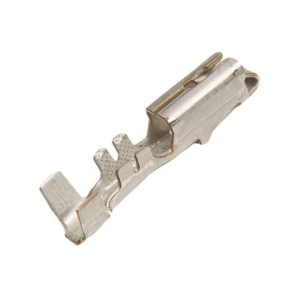
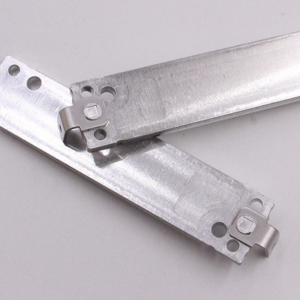
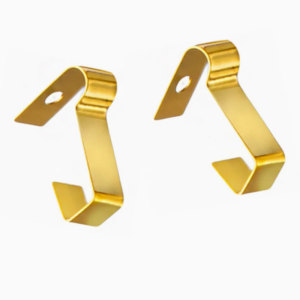
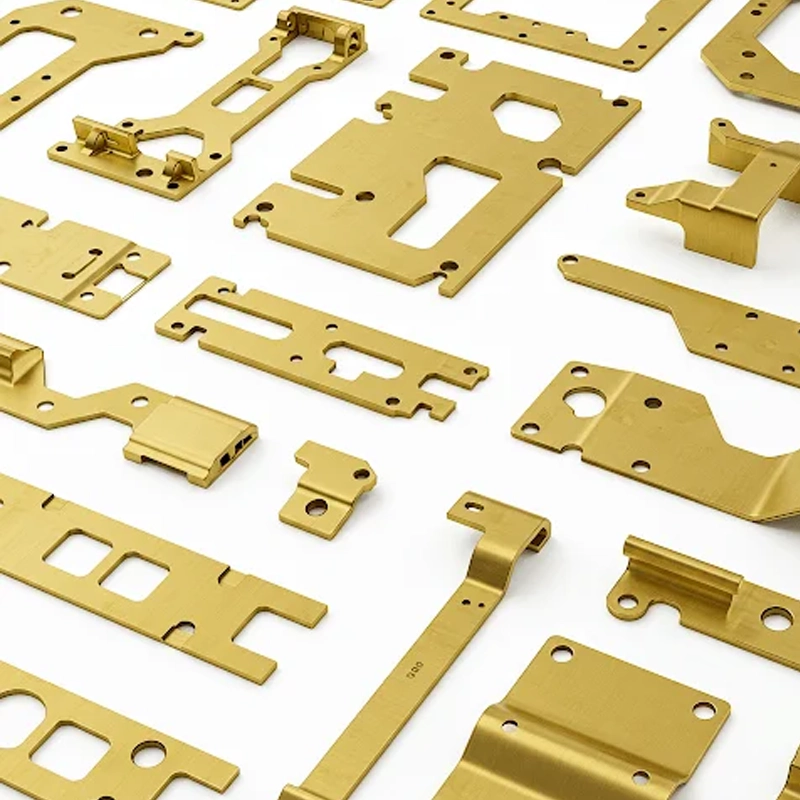
At Plantmetal we supply precision metal stamping service and custom brass components to OEMs across electronics, plumbing, automotive, and decorative hardware markets. Brass stampings combine electrical conductivity, corrosion resistance, aesthetic appeal, and good formability—making them a go-to choice where plated finishes, spring performance, or visual appearance matter. This guide explains advantages, alloy selection, stamping processes, tooling, lubrication, and common applications so procurement and design teams can specify the right stamped brass parts and choose the best manufacturing partner.
Advantages of Brass Estampage
Brass offers a unique balance of properties for stamped components:
- Corrosion resistance — a natural oxide that helps in humid or marine environments.
- Excellent electrical and thermal conductivity — ideal for connectors, terminals, and heat-spreading components.
- Good formability and ductility — supports deep draws, bends, and fine features with low springback.
- Attractive finish — supports plating or polishing for decorative applications.
- Antimicrobial properties — useful in some healthcare or food-contact applications.
- Machinability and joining — brazing, soldering, and welding options expand assembly choices.
These traits make brass stampings valuable for both functional and decorative parts.
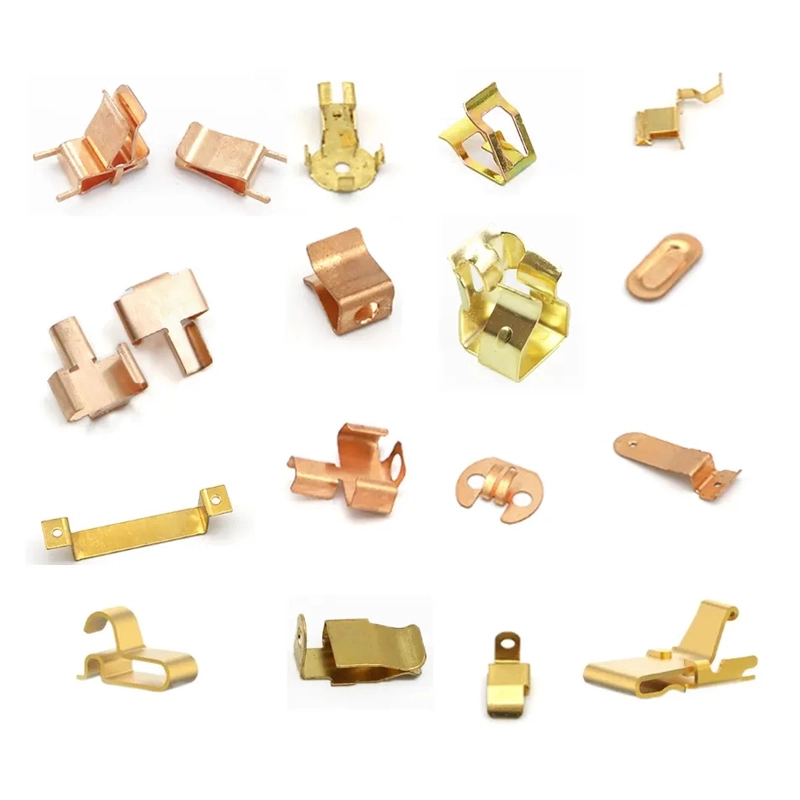
How to Choose Brass Alloy for Stamping Process
Alloy choice directly impacts tooling life, part performance, and cost. Evaluate these factors:
1. Cost
Balance raw-material price with performance. Some high-alloy brasses increase cost but reduce post-processing or rework.
2. Machinability
Free-machining brasses (with lead or bismuth additions) speed secondary operations, but check regulatory constraints for lead in consumer products.
3. Finishing Alternatives
If plating or polishing is required, select alloys with compatible surface chemistry to minimize porosity or plating defects.
4. Weldability
For assemblies needing soldering or brazing, choose alloys known to join cleanly without excessive flux or pre-treatment.
5. Bend Rating
Alloy and temper determine safe bending radii and if annealing is needed before severe forming.
6. Tensile Strength
Higher-strength brasses offer better spring-back resistance for clips and springs but may sacrifice formability.
7. Application
Electrical contacts favor high-conductivity alloys (phosphor bronze or Cu-Zn grades tuned for conductivity), whereas decorative hardware emphasizes surface finish and polishability.
8. Formability and Ductility
For deep draws and complex shapes, choose alloys with proven drawability and low cracking tendency.
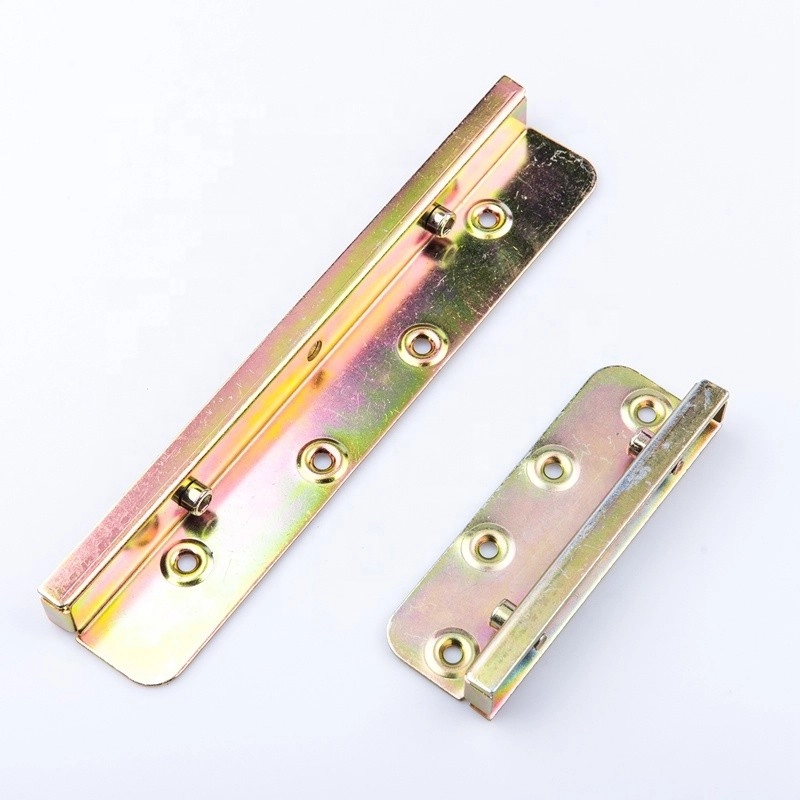
Best Brass Alloys for Stamping Process
Common choices include:
- Common Brass (Cu-Zn) — general-purpose, good balance of formability and finish.
- Muntz Metal (Cu-Zn high-zinc) — good strength and corrosion resistance for marine applications.
- Free-Machining Brass — easy to machine for turned/secondary features.
- Nickel Brass — improved strength and corrosion resistance.
- Admiralty & Naval Brass — designed for seawater resistance.
- Aluminum Brass — excellent corrosion resistance for condensers and heat exchangers.
- Nordic Gold — copper alloy used for coins and decorative parts.
- Cartridge Brass (70/30) — high ductility, ideal for deep drawing.
- Silicon Tombac & High Brass — higher strength brasses for structural small parts.
Selection depends on stamping complexity, intended finish, and environmental exposure.
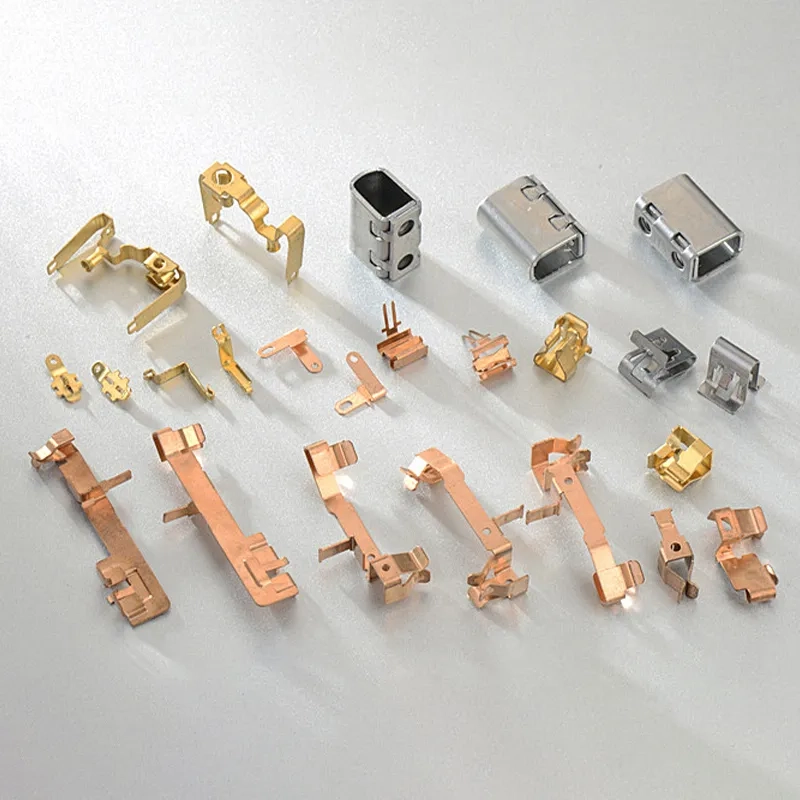
Brass Stamping Processes
Blanking Brass
Strip material is blanked to obtain the flat outline. Tight die clearances ensure clean edges and minimize burr.
Piercing Brass
Holes, slots, and windows are pierced in progressive dies—key for flanges, mounting holes, and locating features.
Dessin Laiton
Deep drawing forms cups and housings. Control of lubrication and draw radii prevents necking or tearing.
Pliage
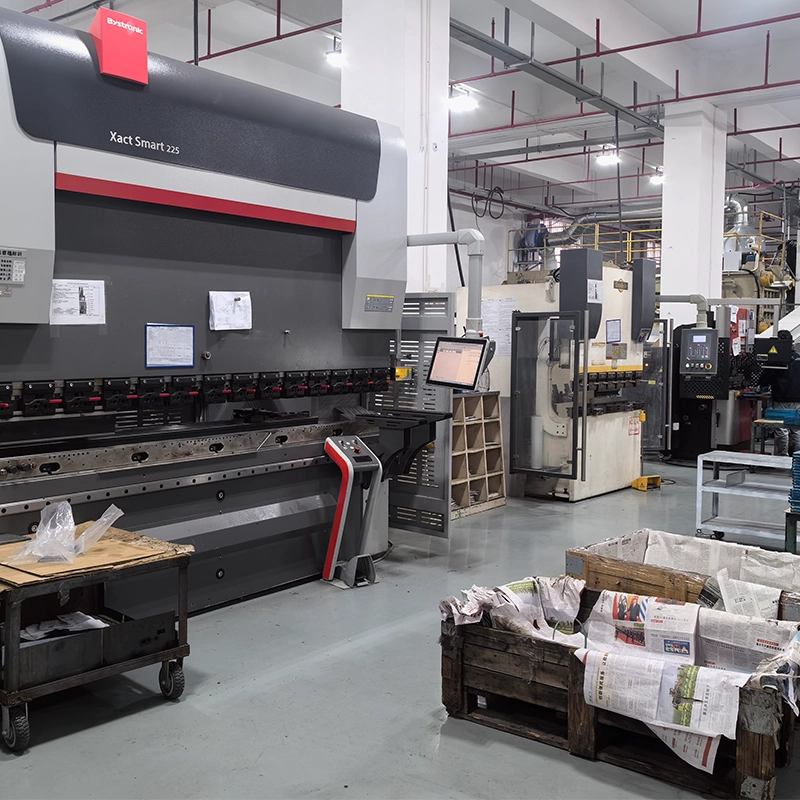
Press brake or die bends form tabs, clips, and spring features. Spring-back compensation and material tempering are critical.
Progressive stamping combines these operations for high-volume runs with extremely low per-piece cost.
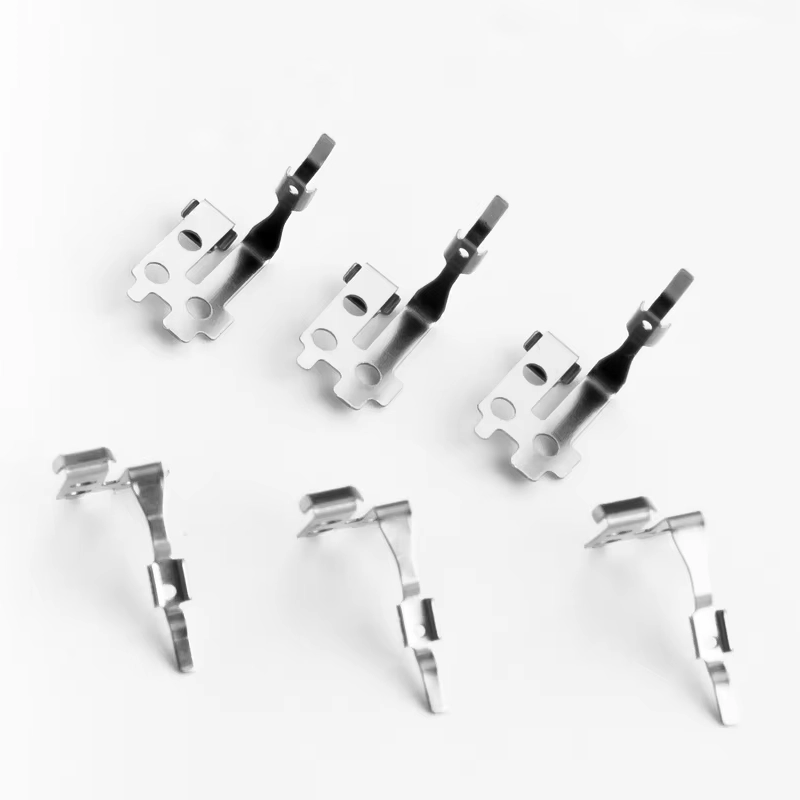
Tools in Brass Stamping
Tooling is the backbone of quality stampings:
- Progressive dies: combine blanking, piercing, forming, and coining in one strip flow.
- Transfer dies: for heavier, multi-station forming where parts require multiple independent feeds.
- Fine-blanking dies: produce burr-free, high-precision profiles where tight edges matter.
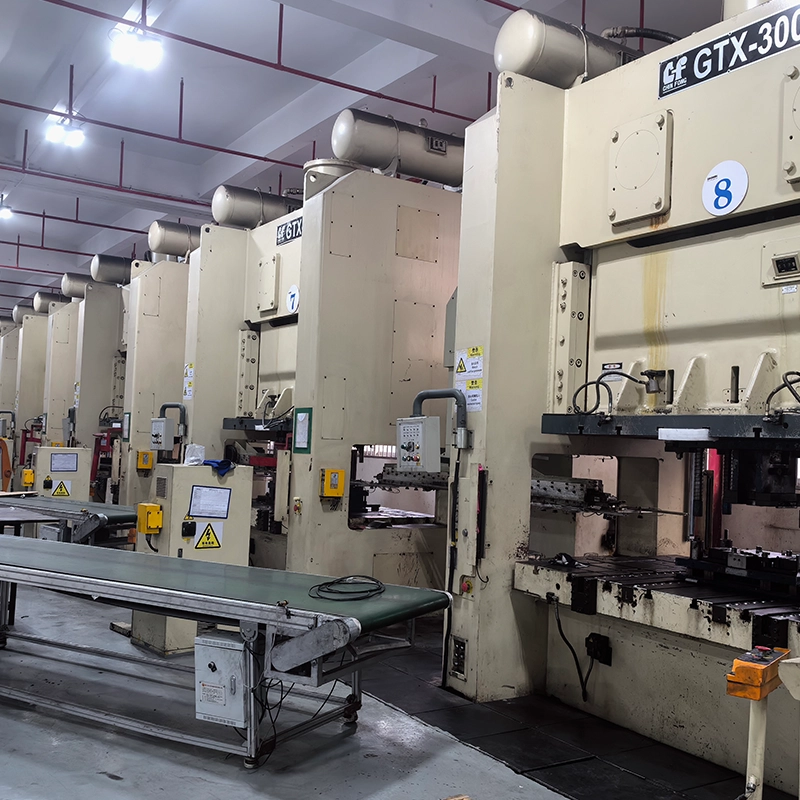
- Hydraulic or mechanical presses: selected by tonnage and stroke requirements.
- Tool steels and coatings: increase die life when stamping abrasive alloys or high run counts.
Investments in high-quality tooling reduce downtime and improve tolerances.
Brass Stamping Lubrication Methods
Lubrication controls friction, cools tools, and prevents galling. Two main categories:
Contact Lubrication
- Oil-based lubricants applied by roll or spray. Provide excellent film strength for heavy forming and drawing.
- Benefits: superior boundary lubrication, good for severe deformation.
- Drawbacks: requires thorough cleaning before plating; environmental handling considerations.
Non-contact Lubrication
- Solid-film or dry coatings and emulsions applied sparingly.
- Benefits: easier wash-off, suitable for light forming and high-speed operations.
- Drawbacks: less robust for deep draws or heavy bending.
Considerations when Selecting Brass Stamping Lubrication System
- Application method: roll, spray, or dip—choose per line speed and die geometry.
- Tooling system speed: high-speed presses benefit from sprays and controlled delivery.
- Automation: centralized lubrication systems support inline cleaning and reduce manual variability.
- Material width and thickness: governs lubricant pickup and distribution.
- Type of stock feeding: coil feed requires consistent viscosity and film strength.
- Lubricant type: water-soluble vs. oil-based affects cleaning and plating prep.
Plantmetal designs stamping lines with reclaim and wash systems to align with customer finish requirements.
Material (additional notes)
Stock procurement—coil specs, annealing state, and surface finish—affect formability and die wear. Pre-anneal or tempering options should align with the needed mechanical properties.
Application of Stamped Brass Parts
Brass stampings appear in:
- Electrical connectors and terminals — reliable conductivity and solderability.
- Switch contacts and springs — resilient electrical performance.
- Decorative hardware — escutcheons, badges, and trim.
- Plumbing fittings and valves — corrosion resistance and machinability.
- Musical instrument components — acoustic properties and finish.
- Coin blanks and medallions — aesthetic and mintability.
- Automotive trim and connectors — durability and plating compatibility.
- HVAC and heat-exchange valves — corrosion-resistant heat transfer parts.
Conclusion
Brass stamping is a versatile manufacturing route delivering functional, attractive, and electrically conductive parts at scale. Successful projects hinge on informed alloy selection, robust die design, appropriate lubrication, and precise process control. Working with a one-stop service partner ensures the entire supply chain—from material sourcing to plating and assembly—is engineered for quality and cost-effectiveness.
At Plantmetal we offer full metal stamping service, in-house tooling, finishing, and custom service packages to serve OEMs and suppliers. We provide DFM support, rapid prototyping, progressive die production, and supply-chain integration so your brass components meet performance and budget targets.
Interested in a quote or a DFM review for brass stampings? Contact Plantmetal today with your drawing, target volumes, and finish requirements. We’ll provide material recommendations, tooling proposals, and a production timeline.