

Are you confident the materials in your next production run will perform in the field? At Plantmetal, we get that question every day. As a manufacturer and factory that supplies precision metal and plastic components to OEMs, we don’t treat material testing as an afterthought — it’s an integral part of our OEM service and custom service offerings. This guide explains the most common material tests, why each matters, and how a production-ready factory uses testing to ensure high quality, traceability, and long-term reliability for your product.
What is material testing and why it’s critical for manufacturers
Material testing is the systematic evaluation of a material’s physical, mechanical, thermal, and chemical properties. For a factory producing components for automotive, medical, aerospace, or industrial applications, these tests verify that raw materials and finished parts meet design specifications, regulatory standards, and performance expectations. In short, testing reduces warranty risk, improves safety, and shortens time-to-market by catching issues early.
At Plantmetal we combine in-house checks and third-party lab services to validate materials prior to mass production, because delivering consistent, high-quality components is what our OEM service agreements demand.
Core mechanical tests every manufacturer should know
Tensile testing
Measures how a material reacts to pulling forces. The test yields tensile strength, yield, elongation, and modulus. The stress–strain curve indicates ductility versus brittleness and helps specify materials for load-bearing parts or fasteners.
Compressive testing
Evaluates resistance to crushing forces. It’s essential for structural components and cast parts that sustain compressive loads.
Flexural (bend) testing
Assesses how a material behaves under bending—important for panels, beams, and non-uniform sections.
Shear testing
Measures resistance to sliding forces and is critical for fasteners, welds, adhesive joints, and connections within assemblies.
Hardness testing (Rockwell, Brinell, Vickers)
Quick way to infer tensile strength, wear resistance, and effectiveness of heat treatments. Hardness checks are routinely used for incoming material inspection and post-heat-treatment verification.
Impact testing (Charpy, Izod)
Tells you how much energy a material absorbs before fracturing — vital for parts exposed to shock or low temperatures where brittle fracture is a risk.
Fatigue testing
Simulates the repeated loading that often causes failure at stresses well below tensile strength. Fatigue life (S–N curves) is indispensable for rotating machinery, automotive components, and implants.
Time- and environment-driven tests for long-term reliability
Creep testing
Measures slow deformation under constant load and temperature — used for high-temperature components in engines and power systems.
Corrosion testing (salt spray, humidity chambers)
Accelerated corrosion tests predict how coatings and alloys will behave in marine, automotive, and outdoor applications.
Thermal analysis (DSC, TGA)
Identifies melting points, glass transition temperatures, and decomposition temperatures — essential for plastics and polymer selection.
Failure-prevention and precision tests
Fracture toughness
Quantifies a material’s resistance to crack propagation — a must for pressure vessels, pipelines, and aerospace structures.
Wear testing (pin-on-disk, Taber, slurry)
Helps select surface treatments, coatings, and alloys for parts exposed to abrasion or sliding contact.
Residual stress measurement (XRD, hole-drilling)
Detects internal stresses from casting, welding, or machining that can later cause distortion or cracking.
Chemical and microstructural evaluation
Composition analysis (OES, XRF, ICP-OES)
Verifies alloy chemistry and ensures batches match spec. This is a first-line defense against material substitution or supply chain inconsistencies.
Metallography / microstructure
Microscopy and etching reveal grain size, inclusions, porosity, and phase distribution — critical for confirming heat-treatment results and casting integrity.
Non-destructive testing (NDT) methods deployed in production
Ultrasonic testing (UT)
Good for internal flaws and thickness measurement in castings and forgings.
Radiography (X-ray)
Provides a detailed view of internal voids, inclusions, and weld integrity.
Magnetic particle and dye-penetrant testing
Cost-effective methods for detecting surface and near-surface defects.
These NDT methods are used at Plantmetal to certify critical parts without destroying samples — vital for assemblies where every component counts.
Electrical, thermal, and surface property tests
Electrical conductivity/resistivity
Essential for bus bars, contacts, and conductive coatings.
Thermal conductivity
Used for heat-sink materials and insulation selection.
Adhesion, coefficient of friction, and surface roughness
These surface tests inform coating selection, assembly fit, and wear behavior.
How to choose the right test — a practical framework
Selecting appropriate tests depends on:
- Material class: metal, polymer, ceramic, or composite.
- End-use environment: temperature, humidity, chemicals, and mechanical loads.
- Functional requirement: strength, fatigue life, hermeticity, or electrical behavior.
- Regulatory/industry standards: automotive (IATF 16949), medical (ISO 13485), aerospace, and others.
- Production volume and cost constraints.
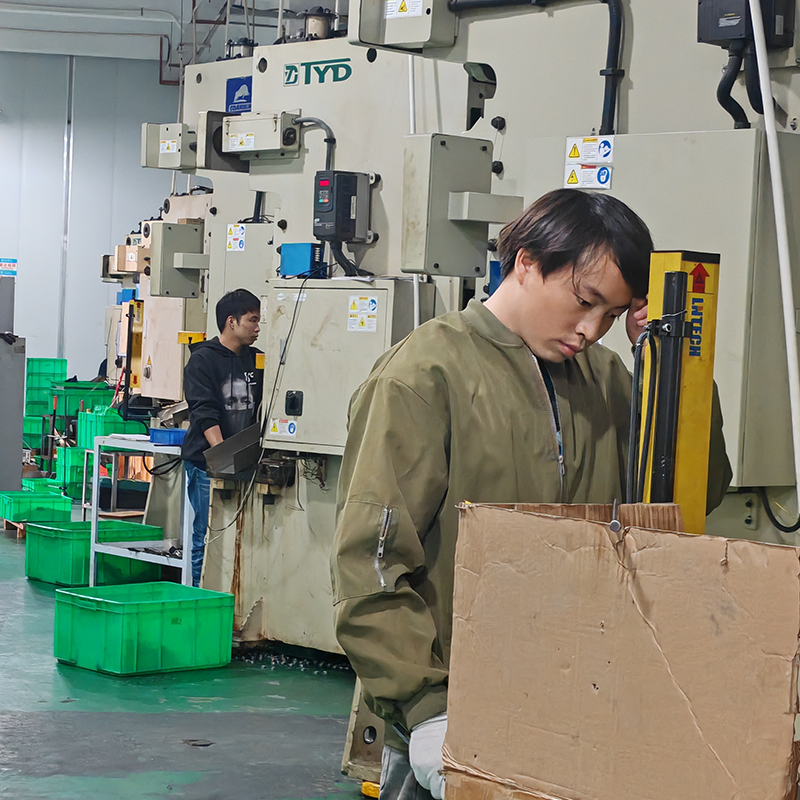
Plantmetal’s engineers perform a test-matrix assessment during the design-for-manufacture (DFM) stage and recommend a cost-effective combination of destructive and NDT methods tailored to your product goals.
How a factory integrates testing into a one-stop OEM service
At Plantmetal, testing is embedded into our manufacturing workflow:
- Incoming material inspection: Composition checks (OES/XRF) and hardness sampling to verify supplier material certificates.
- Process control: In-process hardness, dimensional, and surface checks with SPC monitoring.
- Post-processing validation: Heat-treatment verification, metallography samples, and residual stress checks when needed.
- Final acceptance: Functional tests (pressure, leak, fatigue), NDT, and detailed inspection reports.
- Traceability and reporting: Full batch traceability, Certificates of Conformance (CoC), and third-party lab reports available on request.
This integrated approach enables Plantmetal to provide a true one-stop service for OEM customers — from prototype validation through high-volume production — and supports custom service requests for special testing protocols.
Benefits of partnering with a testing-savvy manufacturer
- Lower field failure rates: Tests catch issues before they reach customers.
- Faster development cycles: Early testing removes iteration bottlenecks.
- Regulatory compliance: Test records support certifications and audits.
- Better supplier control: We validate incoming batches and hold suppliers to spec.
- Documented quality: Inspection reports and material certificates support warranty claims and traceability.
Conclusion
If your product depends on predictable mechanical performance, long-term durability, or regulatory compliance, then material testing is not optional — it’s mission-critical. At Plantmetal, our factory-focused approach to testing, combined with OEM service and custom service capabilities, ensures we deliver high-quality components that perform in the real world. Reach out to our engineering team for a tailored material testing plan, an evaluation of supplier certificates, or a quote for prototype testing. Let us help you reduce risk and bring a reliable product to market faster.