Introduction
If you’re in the business of mold-making, you already know that molds are put to the test. Withstanding intense pressure, high temperatures, and constant friction, molds can quickly degrade without the proper treatment. Here’s where heat treatment becomes a game-changer—it’s the unsung hero that extends the life of molds and ensures they perform at their best. In fact, heat treatment can be the deciding factor between a mold that lasts for thousands of cycles and one that gets prematurely retired.
In industries such as automotive, aerospace, or consumer goods manufacturing, mold performance and longevity are critical. At PlantMetal, we understand the importance of top-tier heat treatment processes that keep our molds in peak condition for longer production runs. Let’s dive into why heat treatment is so vital for the life of your molds and what makes it essential in the manufacturing world.
What Exactly is Tratamento Térmico?
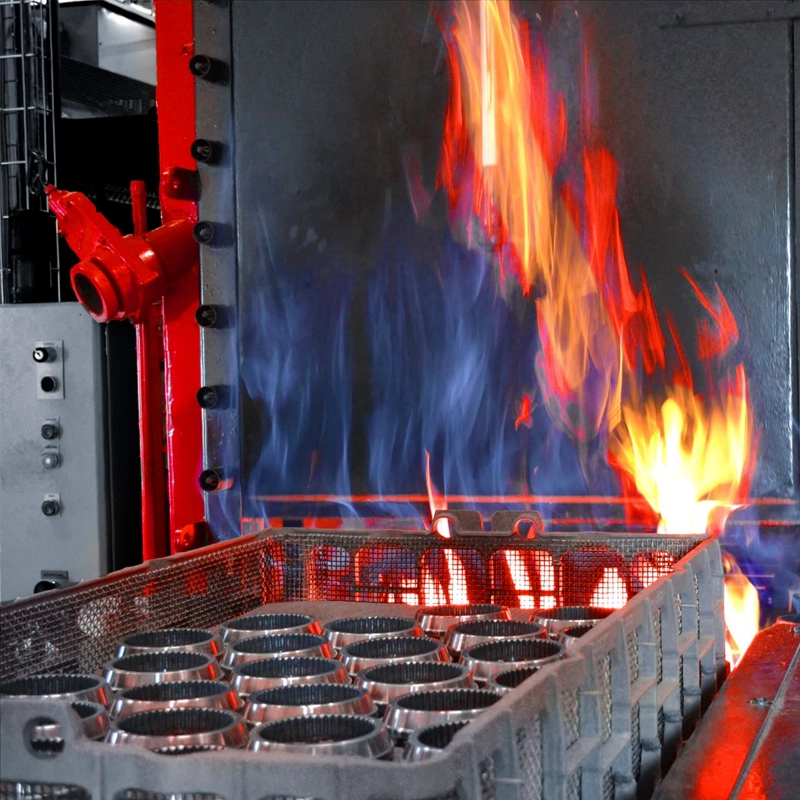
Before we dive into the nitty-gritty of heat treatment for tool steel, let’s break it down in simple terms. Heat treatment is the process of heating and cooling steel in a controlled way to enhance its mechanical properties—primarily its hardness, toughness, and wear resistance. You can think of it like baking a cake—but instead of flour and sugar, you’re working with steel, and instead of a sweet treat, you’re after strong, durable, and reliable tooling.
The ultimate goal? To make steel tougher and more wear-resistant so it can withstand the extreme conditions of mold-making and metal forming, which often involves high temperatures, pressures, and repetitive stresses. Heat treatment transforms your steel from good to great, ensuring it’s up to the task.

Why Should You Care About Heat Treatment?
Well, if you’re involved in the production of complex parts or precision tooling, you probably want your molds to last, right? Whether you’re manufacturing high-end automotive parts, industrial machinery, or even consumer products, your molds need to stand the test of time. This is where heat treatment plays a key role.
Without heat treatment, your tool steel is like trying to run a marathon in flip-flops—it might work for a short time, but it’s definitely not built for long-lasting performance. But with the right heat treatment processes, you get steel that’s ready for anything. So, let’s explore how heat treatment helps mold steel perform better in the most demanding environments.
A. Hardness and Wear Resistance
One of the most important benefits of heat treatment is the increased hardness it provides. After processes like quenching and tempering, the steel becomes significantly harder and more resistant to wear. This is crucial in mold-making industries where molds are subjected to constant friction and high-impact forces.
Heat-treated tool steel resists wear and tear much better, preventing cracks, erosion, and premature degradation. In environments like automotive or aerospace manufacturing, where molds are expected to produce thousands of parts, heat-treated steel ensures that your molds can handle the repetitive stresses without breaking down.
B. Toughness and Resistance to Fatigue
Hardness is essential, but it’s not everything. Too much hardness can make steel brittle, and that’s definitely not something you want in a mold that’s subjected to extreme conditions. Think of it this way—hard steel is like glass: strong but prone to cracking.
Through heat treatment, steel achieves a balance between hardness and toughness. Tempering, for example, reduces brittleness and increases the steel’s ability to absorb shock and resist fatigue. For molds that experience thermal cycling—like those used in die casting or injection molding—this balance is crucial for ensuring the molds don’t crack or fail under stress.
C. Improved Thermal Stability
For manufacturers like PlantMetal, thermal stability is a top priority. Molds need to be able to handle rapid changes in temperature without warping, cracking, or losing their dimensional integrity. Heat treatment enhances the steel’s ability to resist thermal expansion and maintain its form even during the extreme heat and cooling cycles that are a part of modern mold-making processes.
In industries that require high-precision parts, like automotive or aerospace, a mold that warps or deforms during production is a major issue. Heat treatment ensures the steel remains stable and keeps the mold’s precision intact.
How Heat Treatment Enhances Tool Steel in Mold Production
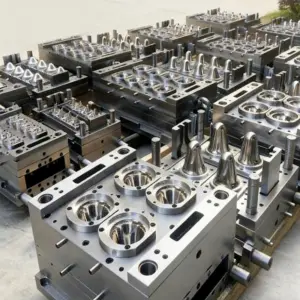
Now that we’ve discussed the general benefits of heat treatment, let’s zoom in on how it specifically impacts mold-making.
Enhanced Surface Hardness
Tool steel that’s been heat-treated has a significantly harder surface, which helps protect it from the abrasive materials it encounters during molding processes. This is especially important in molds for industries like automotive manufacturing, where molds are subjected to heavy wear and tear.
Improved Dimensional Stability
Molds need to maintain tight tolerances, especially in industries where precision is everything. Heat treatment improves dimensional stability, reducing the risk of mold distortion and ensuring that every part produced meets exact design specifications.
Reduced Downtime and Maintenance
If your molds keep breaking down or becoming deformed, you’re not just losing time in production—you’re also driving up maintenance costs. Properly heat-treated steel helps molds withstand the stresses of production, reducing downtime and keeping maintenance costs low. At PlantMetal, we make sure our molds are treated to the highest standards to ensure long-lasting performance with minimal maintenance.
The Science Behind Heat Treatment: More Than Just “Hot” and “Cold”
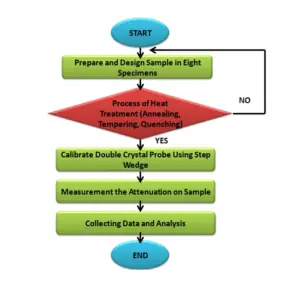
While it may seem like heat treatment is just about throwing steel into an oven and hoping for the best, there’s actually a lot of science involved. Heat treatment is a controlled process that involves several stages, including:
Annealing:
This involves heating the steel to a specific temperature and allowing it to cool slowly. It softens the steel, improving its ductility and making it more resistant to cracking, which is important for molds that will be subjected to heavy use.
Hardening (Quenching):
In this stage, steel is heated to a high temperature and then rapidly cooled (often in water or oil). This increases the steel’s hardness, but it also makes the steel more brittle, which is why tempering is necessary.
Tempering:
After hardening, the steel is reheated to a lower temperature to reduce brittleness and improve toughness. This step helps achieve the ideal balance between hardness and strength, crucial for molds that need to endure frequent heating and cooling cycles.
Carburizing:
This process involves adding carbon to the surface of the steel, making it harder on the surface while keeping the interior softer. It’s perfect for molds that need to resist wear but maintain a tough core to absorb shock.
Each of these processes helps enhance the steel’s performance, making it well-suited for the demands of modern mold production.
Conclusion
When it comes to tool steel for mold-making, heat treatment is absolutely essential. It’s the difference between a mold that withstands the rigors of mass production and one that needs to be replaced after only a few hundred cycles. At PlantMetal, we prioritize the quality of our molds by ensuring that all tool steel undergoes the highest quality heat treatment processes. Whether you’re producing automotive parts, industrial components, or precision machinery, our molds are built to last, ensuring that your production process is efficient and cost-effective.