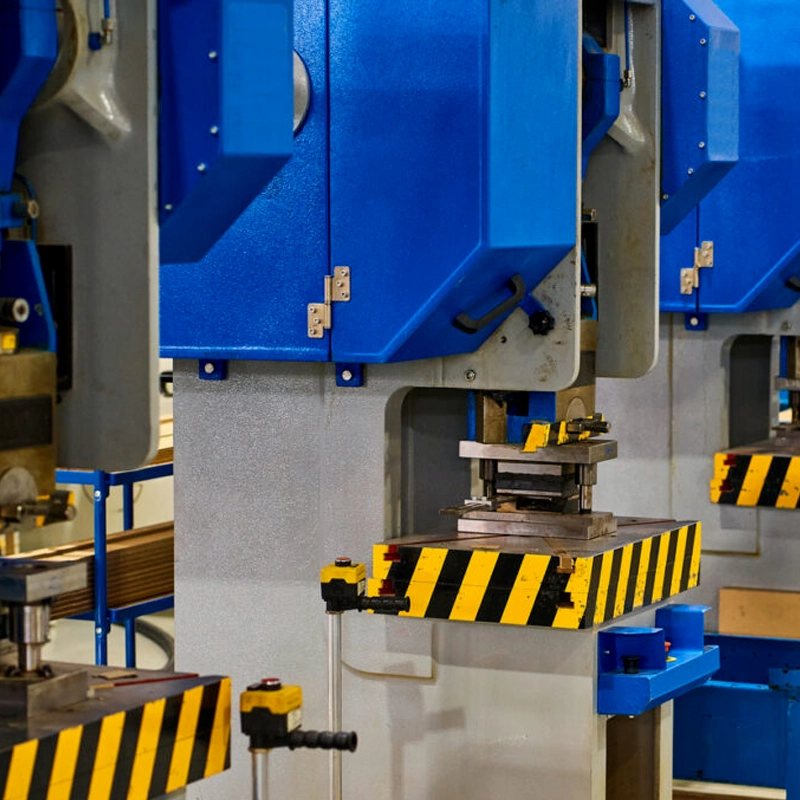
If you’ve ever looked inside a car, a household appliance, or even certain electronic devices, chances are you’ve seen the results of deep drawing stamping without realizing it. Many of the smooth, hollow metal parts used in modern products—everything from enclosures to connectors—are made using this highly efficient forming process. Deep drawing may sound complicated, but at its core, it’s a clever way of transforming flat metal sheets into strong, three-dimensional shapes with remarkable precision.
What Is Deep Drawing Stamping?
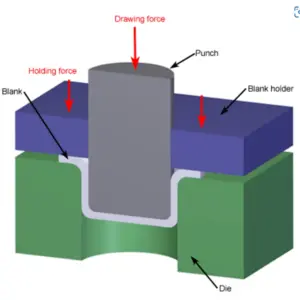
Deep drawing is a metal forming process where a flat sheet metal blank is pulled into a die cavity using a punch, creating a seamless, hollow component. The process gets its name from the fact that the depth of the formed part can be greater than its diameter.
Unlike simple stamping operations that focus mainly on cutting or bending, deep drawing reshapes the material while maintaining its structural integrity. The metal flows into the die rather than being removed, which allows manufacturers to produce durable components with consistent wall thickness.
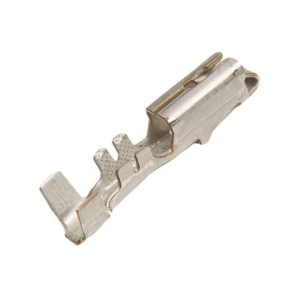
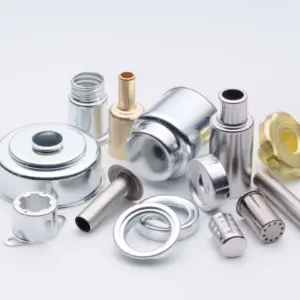
Common examples of deep-drawn parts include cylindrical housings, battery cases, electronic shielding components, and automotive structural elements.
The Basic Deep Drawing Process
The process typically involves three primary components: a blank holder, a punch, and a die. Each plays a critical role in ensuring the material flows properly without tearing or wrinkling.
-
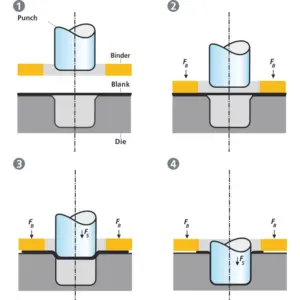
Blank Preparation
The process begins with a flat sheet metal blank, often made from materials like stainless steel, aluminum, copper, or brass. Material selection is important because different metals respond differently to forming stresses. -
Clamping the Blank
The blank holder secures the metal sheet in place. This pressure prevents the material from wrinkling while still allowing controlled movement as the metal flows into the die. -
Punch Forming
The punch presses the sheet metal downward into the die cavity. As the punch moves, the metal stretches and flows along the die walls, gradually forming the desired shape. -
Part Formation and Ejection
Once the punch reaches the required depth, the part takes its final shape. The formed component is then released from the die and prepared for any secondary operations such as trimming, piercing, or surface finishing.
The key to successful deep drawing lies in balancing pressure, lubrication, and material flow. Too much force can cause tearing, while too little control can lead to wrinkles or uneven walls.
Why Manufacturers Use Deep Drawing
Deep drawing is widely used in manufacturing because it offers several practical advantages.
Material efficiency is one of the biggest benefits. Since the process forms metal instead of cutting it away, scrap rates are relatively low.
Structural strength is another major advantage. Deep-drawn components often have excellent strength due to the work hardening that occurs during forming.
The process is also ideal for high-volume production. Once the tooling is developed, deep drawing can produce thousands—or even millions—of consistent parts with very tight tolerances.
Finally, deep drawing works exceptionally well for complex shapes that require seamless construction, which reduces the need for welding or assembly.
Materials Commonly Used in Deep Drawing
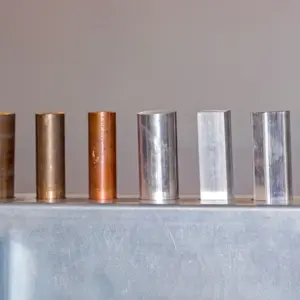
Not all metals behave the same during forming. Materials used for deep drawing typically have good ductility and formability.
Some of the most common materials include:
-
Stainless steel
-
Aluminum alloys
-
Медь
-
Латунь
-
Low-carbon steel
The choice of material often depends on the part’s intended application, whether it requires corrosion resistance, electrical conductivity, or structural durability.
Engineering Considerations
Deep drawing may look straightforward, but successful production requires careful engineering. Tooling design, lubrication, material thickness, and draw ratio all influence the final outcome.
Engineers often perform design-for-manufacturing (DFM) analysis to ensure the part geometry can be produced reliably. Factors like corner radii, wall height, and material thickness must be optimized before production begins.
This is why collaboration between product designers and manufacturing engineers is so important during early development stages.
Deep Drawing in Modern Manufacturing
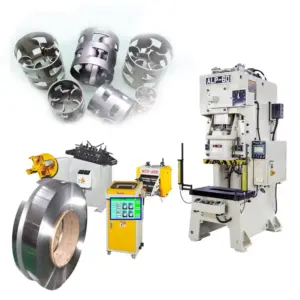
Today, deep drawing is commonly combined with progressive stamping and automated press systems. These integrated production lines allow manufacturers to perform multiple operations—forming, trimming, piercing, and shaping—within a single continuous process.
The result is faster production, lower costs, and consistent product quality.
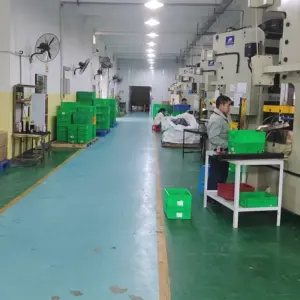
At specialized manufacturing facilities like Plantmetal, deep drawing is supported by modern stamping presses, servo feeding systems, and advanced die protection controls. These technologies help maintain tight tolerances and stable production even in high-volume manufacturing environments.
Final Thoughts
Deep drawing stamping might not be the most visible part of manufacturing, but it plays a huge role in producing many of the metal components we rely on every day. By transforming flat sheets into durable three-dimensional parts, the process combines efficiency, strength, and precision in a way few manufacturing methods can match.
As industries like automotive, electronics, and consumer products continue to demand lightweight yet durable components, deep drawing remains one of the most reliable solutions available. And with experienced manufacturers such as Plantmetal supporting the process from design through production, turning complex metal concepts into real-world components becomes a whole lot smoother.